Permanent part identity
Apply serials, codes, logos and product references directly to the component.
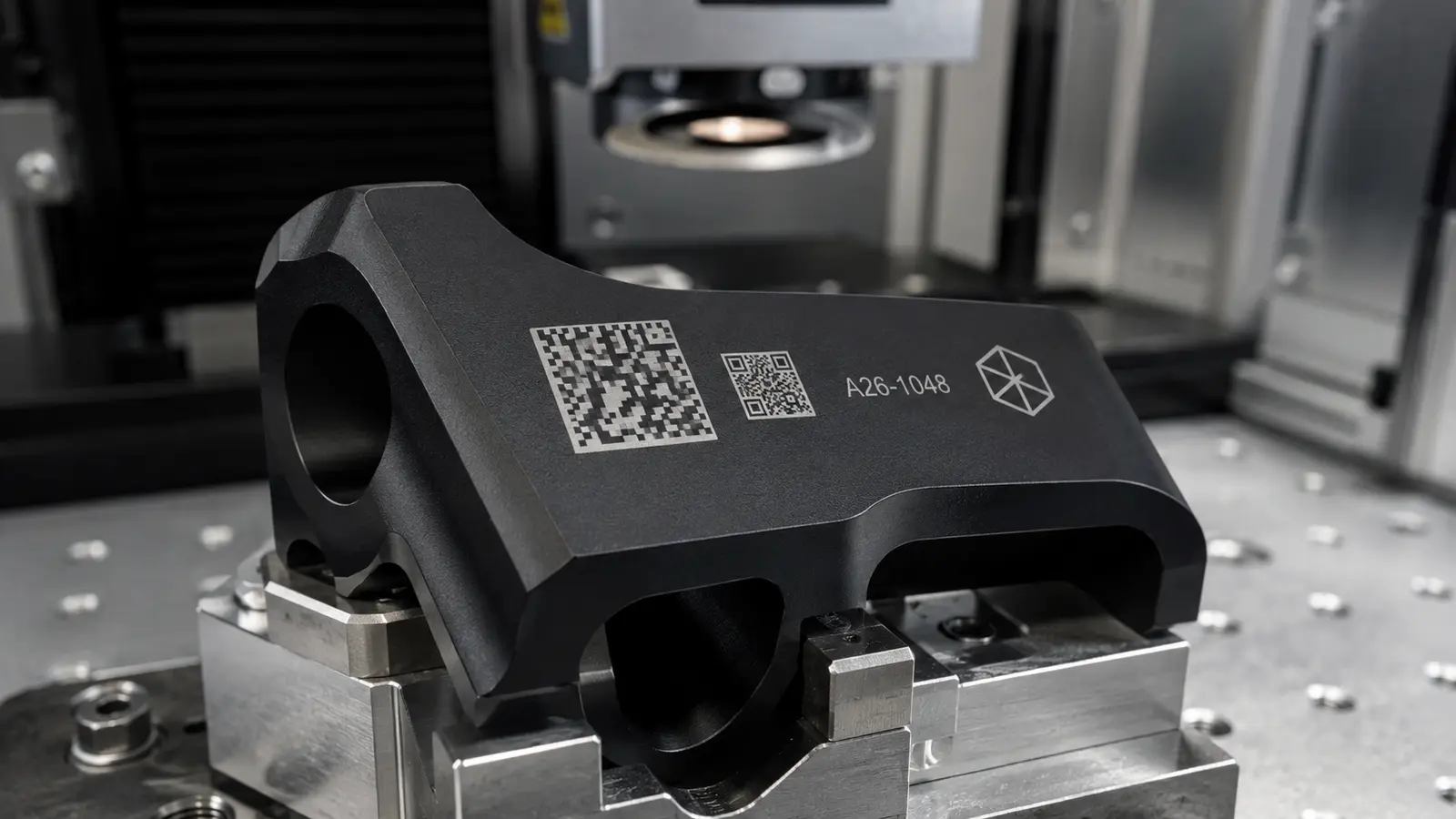
Raw, anodised and coated aluminium
Create permanent serial numbers, logos, QR codes and DataMatrix symbols on aluminium parts using a process proven on the exact alloy and surface finish.
Material and finish first
A fibre laser can permanently mark many aluminium alloys and finishes, including anodised aluminium. The most reliable route is to test the production alloy, colour and coating because a result proven on one finish cannot safely be assumed for another.
Raw, machined, anodised, bead-blasted, painted and powder-coated aluminium can respond differently to the same settings. Oxford Traceability uses representative samples to establish contrast, edge quality, cycle time and acceptable surface change before the machine is specified.
Discuss your marking requirementApply serials, codes, logos and product references directly to the component.
Control spot size, focus and contrast for compact DataMatrix and QR symbols.
Choose settings around the alloy, anodise, coating and required surface effect.
Generate fixed or variable content from recipes, files, scanners or factory systems.
Aluminium surfaces
Some applications require a bright mark on a dark anodised finish; others need a dark, high-contrast result on a pale surface or controlled removal of paint. The acceptable visual effect, durability and smallest feature are more useful specification inputs than wattage alone.
Include the alloy where known, approved colour range, finish variation, cleaning method and the smallest acceptable code or character.
Fixture and focus
Part location, focus height and orientation determine whether the approved sample result can be repeated in production. A dedicated nest, adjustable fixture or rotary unit may be required, with sensing or vision to prevent the wrong part or program being used.
A good laboratory mark is only the start. Loading, recipe selection, focus, extraction and inspection need to work at the required production rate.
Specification questions
Use these points to compare suppliers and trial evidence on the same basis.
Technical guidance should be confirmed by sample trials on the actual alloy and finish; Oxford Traceability does not assume one aluminium grade represents another.
Direct answers
We will test your parts and help convert the required result into a practical machine specification.
Call 01865 362785Yes, anodised aluminium is a common fibre-laser application. The exact result depends on anodise colour, thickness, alloy and finish, so representative production parts should be trialled.
The visible result depends on the material and process response. Define the required contrast and supply the actual part so settings can be chosen against an accepted sample rather than a generic colour promise.
Yes. A system can be integrated with conveyors, robots, PLCs, product recipes and vision checks where the loading method and line controls are defined.
Often yes. Saved programs and change-part fixtures can support a product family, provided every part remains within the working field, focus range and enclosure envelope.
Start your marking trial
Share the material, mark content and production rate. We will help you define the right fibre laser marking system.
Your application
Tell us what you need to mark and we will come back to you.