Pre-mark checks
Confirm part presence, type, orientation and mark location before the laser fires.
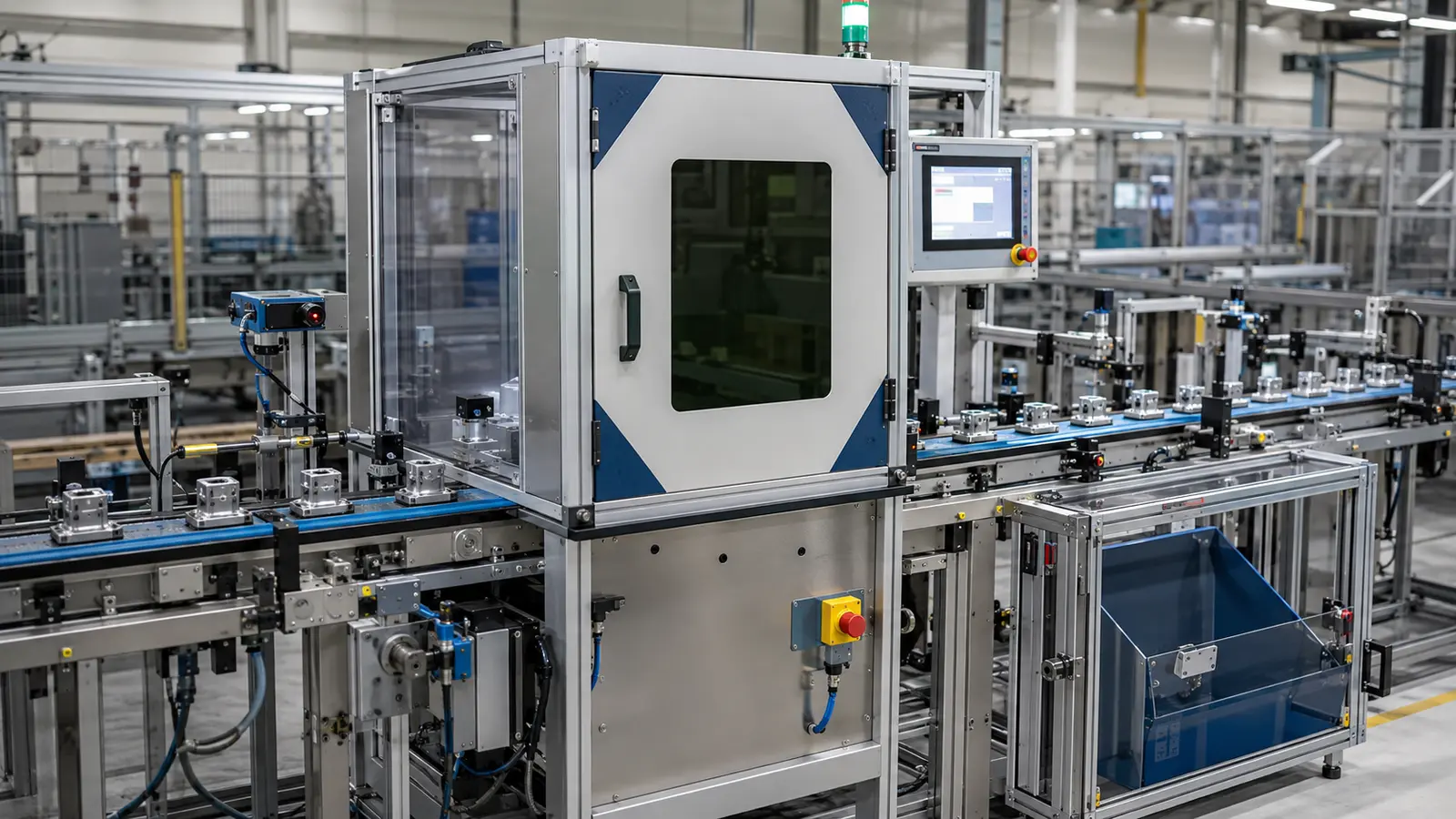
Part checks, code reading and result control
Combine fibre laser marking with machine vision to check the part, confirm the applied content and control non-conforming results.
Specify the inspection correctly
A vision-verified laser marking system uses cameras before or after marking to inspect the component and result. It can prevent marking the wrong part, read OCR or 2D codes, compare content with expected data and trigger a controlled response. Formal code verification must be specified separately from simple decoding.
A camera can confirm that a mark exists, read text or a 2D code, compare decoded data with the intended identifier, assess position, or formally grade a symbol. Oxford Traceability separates these requirements so the optics, lighting, software and reject logic match the real quality decision.
Discuss your marking requirementConfirm part presence, type, orientation and mark location before the laser fires.
Read text, QR or DataMatrix data and compare it with the intended record.
Inspect position, contrast or defined code-quality measures using the agreed method.
Stop, retry, reject or quarantine parts and record the inspection outcome.
Before marking
Pre-mark inspection can identify a feature, read an existing component code, confirm orientation or select the correct program. The camera view and fixture datum must be designed together so the check is reliable across normal production variation.
Define the decision, tolerance and expected production variation instead of asking generally for ‘a camera check’.
After marking
Post-mark vision can check mark presence, position, OCR/OCV content or 2D code data. Where quality grading is required, the verifier, lighting geometry, calibration and standard must be identified as part of the project.
A code may decode on one reader without meeting a specified quality grade. Keep these acceptance levels separate in the requirement.
Specification questions
Use these points to compare suppliers and trial evidence on the same basis.
For 2D readiness and symbol distinctions, see GS1 guidance for solution providers. The inspection method and acceptance threshold must match the customer’s controlled requirement.
Direct answers
We will test your parts and help convert the required result into a practical machine specification.
Call 01865 362785Yes. The camera can be positioned in the cell to inspect the mark after completion, provided lighting, focus, component position and cycle time support the required check.
Decoding retrieves the code data. Verification assesses defined quality characteristics using a specified method and calibrated setup. They are not interchangeable.
Yes. The inspection result can be compared with intended production data and returned to a PLC, database or MES through an agreed interface.
The response is designed with the customer. Options include stopping the cycle, retrying a permitted check, diverting or locking the part, raising an alarm and recording the event.
Start your marking trial
Share the material, mark content and production rate. We will help you define the right fibre laser marking system.
An interrupted laser cycle creates two questions: what is physically on the part, and what identity has already been issued to it? Restarting the program without resolving both can leave a partial mark, duplicate identity or an unexpected second code. Include this state in the marking-cell specification alongside ordinary pass and fail results.
Ask the controls and quality teams to define when an identifier is reserved, applied, verified and accepted. A failed or uncertain result should retain its link to the physical component until an authorised disposition is made. Whether a part can be remarked depends on the surface, mark location and customer requirement; a new mark should not be assumed to erase or invalidate an existing readable one.
Use controlled samples to review an interrupted cycle and the permitted recovery route. Record the issued data, observed code, inspection result and final disposition so rework does not silently create a new production record. This is particularly useful for serialised parts that may return to the station. Share your current rework rules and an example identifier format when discussing a vision-verified fibre laser project.
No automatic assumption is appropriate. The issued identity, physical mark and approved rework rule must be reconciled.
Only where an assessed rework method is permitted and the existing mark cannot create ambiguous identification.
Your application
Tell us what you need to mark and we will come back to you.