Interlocked access
Control normal access to the marking area through the machine design.
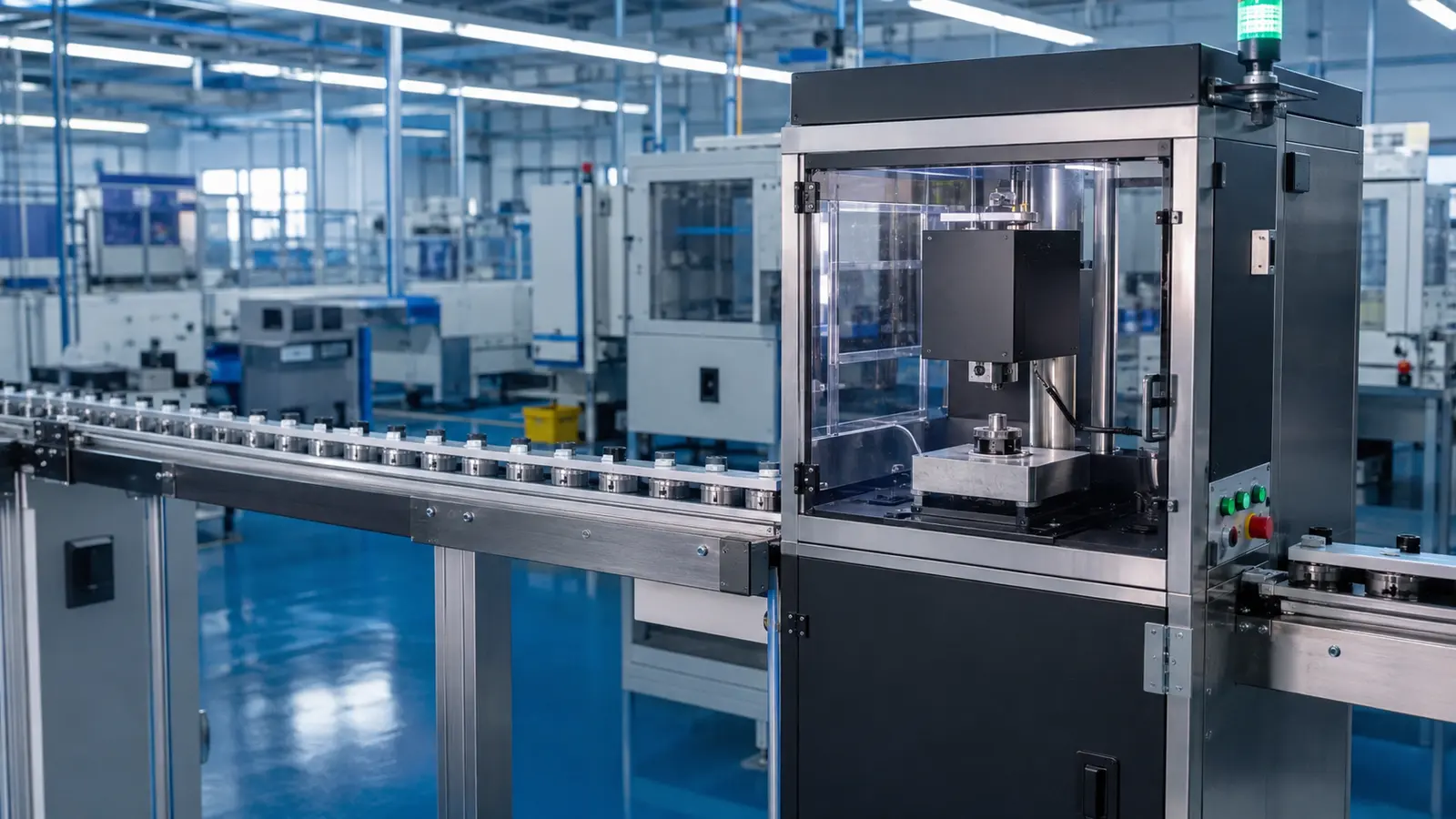
Compact operator-ready workstations
Benchtop and floor-standing workstations specified around safe access, part loading, focus, fixtures, extraction and day-to-day production control.
Standalone laser marking
An enclosed fibre laser marking machine combines the laser source and optics with an interlocked working chamber, operator controls, focus arrangement and part fixture. Correctly engineered, the complete product can be classified for safer normal operation while containing a higher-class embedded laser.
Oxford Traceability configures the workstation around the largest part, required marking field, loading frequency and production record—not around a catalogue photograph.
Control normal access to the marking area through the machine design.
Locate the part at the correct position, orientation and focus.
Capture process emissions at the source where the application requires it.
Give operators approved jobs while protecting critical parameters.
Machine format
The label matters less than the usable envelope. Part height, door opening, fixture space, focal distance, marking field and service access determine whether a compact cabinet genuinely fits the job.
Chucks, nests, rotary axes and operator hand clearance all consume working space inside the enclosure.
Safety & extraction
High-power laser sources can injure eyes and skin. The machine risk assessment, enclosure, interlocks, access control, extraction and maintenance procedures should be considered together. Only trained and authorised personnel should access embedded laser systems during service.
See the UK Health and Safety Executive’s workplace laser safety guidance.
An embedded laser source and the finished workstation may have different classifications. Confirm the declared classification and intended operating conditions for the supplied system.
Production usability
Good workstation design reduces operator decisions. A fixture establishes position, job selection confirms the correct recipe, the interlock controls access and an optional reader or vision system verifies the result.
The laser exposure may be brief, but opening, loading, closing, focusing, checking and unloading determine the real operator cycle.
Workstation questions
Send the largest part, smallest mark and expected daily throughput.
Discuss your requirementIt is a complete laser product designed so accessible laser radiation remains within the Class 1 limits during its intended normal operation. The exact declaration, operating conditions and maintenance controls must be confirmed for the supplied machine.
Often yes. Saved recipes, adjustable focus and change-part fixtures can support a part family, provided every component fits the usable working envelope and can be located repeatably.
The requirement depends on the material, coating, process and risk assessment. The enclosure should provide a practical extraction connection and airflow route where fumes or particles need to be captured.
Yes, if the enclosure provides sufficient height, depth, focal distance and door access for the rotary device, chuck, component and cable movement. This should be checked at the design stage.
Start your marking trial
Share the material, mark content and production rate. We will help you define the right fibre laser marking system.
Your application
Tell us what you need to mark and we will come back to you.