Measurable depth
Set an acceptance target rather than relying on a visual description of deep engraving.
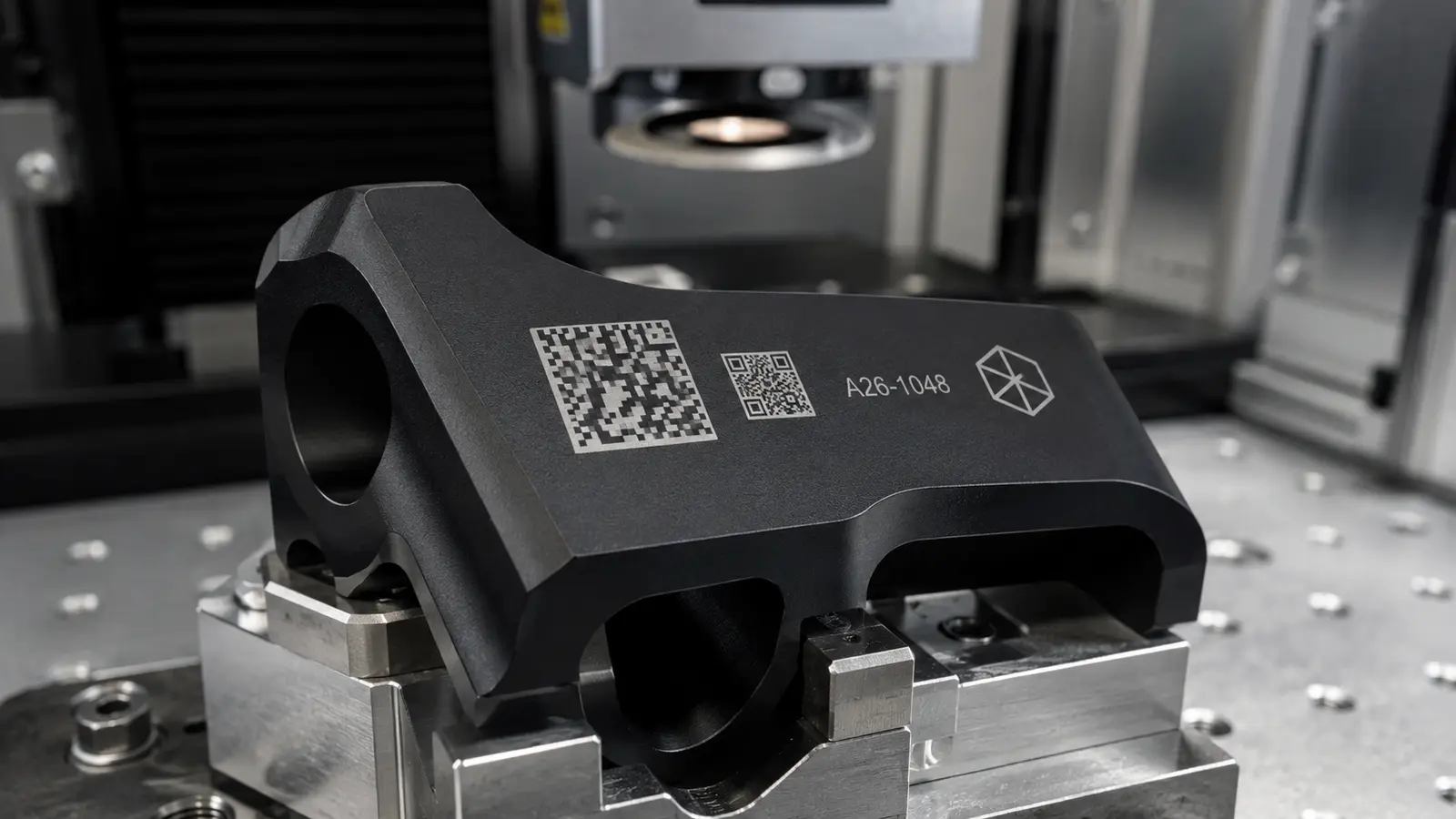
Recessed permanent identification
Specify a controlled material-removal process around the required depth, detail, finish and cycle time—not laser power in isolation.
Depth is a process requirement
A pulsed fibre laser can produce recessed engraving on many metals, but ‘deep’ must be stated as a measurable requirement. A 50W source may improve some processes, yet source type, pulse energy, optics, field size, focus management and scan strategy also determine depth and cycle time.
A recessed mark is created through repeated, controlled material removal. Alloy, hardness, depth, marking area, hatch strategy, focus and allowable heat input all influence the result. We use trials to balance depth, edge definition, surface finish and production time.
Discuss your marking requirementSet an acceptance target rather than relying on a visual description of deep engraving.
Create recessed serials, logos, scales and machine-readable codes.
Develop the pass strategy around part mass, distortion risk and surface requirement.
Record sample settings, depth, quality and time before final machine selection.
Power and process window
Higher average power can support faster material removal in some applications, but it does not guarantee a better result. Pulse characteristics, spot size, lens selection, field size, focus and the number and order of passes all affect the finished engraving.
Compare an engraved production sample, measured depth and cycle time—not just the wattage shown on a quotation.
Production cell design
Deep engraving can create more particulate and process residue than a light surface mark. The cell should provide suitable extraction access, predictable part location, focus control and practical cleaning and maintenance arrangements.
The material, coating and process must be assessed so airborne contaminants can be controlled using a suitable extraction strategy.
Specification questions
Use these points to compare suppliers and trial evidence on the same basis.
For workplace airborne-contaminant controls, see the HSE guide to local exhaust ventilation. The customer’s risk assessment and actual process materials determine the required controls.
Direct answers
We will test your parts and help convert the required result into a practical machine specification.
Call 01865 362785There is no useful universal depth implied by the word ‘deep’. State a measurable target and tolerance so sample results and cycle times can be compared fairly.
No. Higher power may help some removal processes, but pulse characteristics, optics, field size, material and required detail also affect the result.
Potentially, but depth, cell geometry, surface texture and lighting affect readability. The complete symbol should be trialled and checked using the intended reader or verification method.
Material removal can generate fumes and particles. The required control depends on the material, coating and process risk assessment, so extraction should be considered as part of the system design.
Start your marking trial
Share the material, mark content and production rate. We will help you define the right fibre laser marking system.
Your application
Tell us what you need to mark and we will come back to you.