Controlled data
Transfer identifiers from approved production sources.
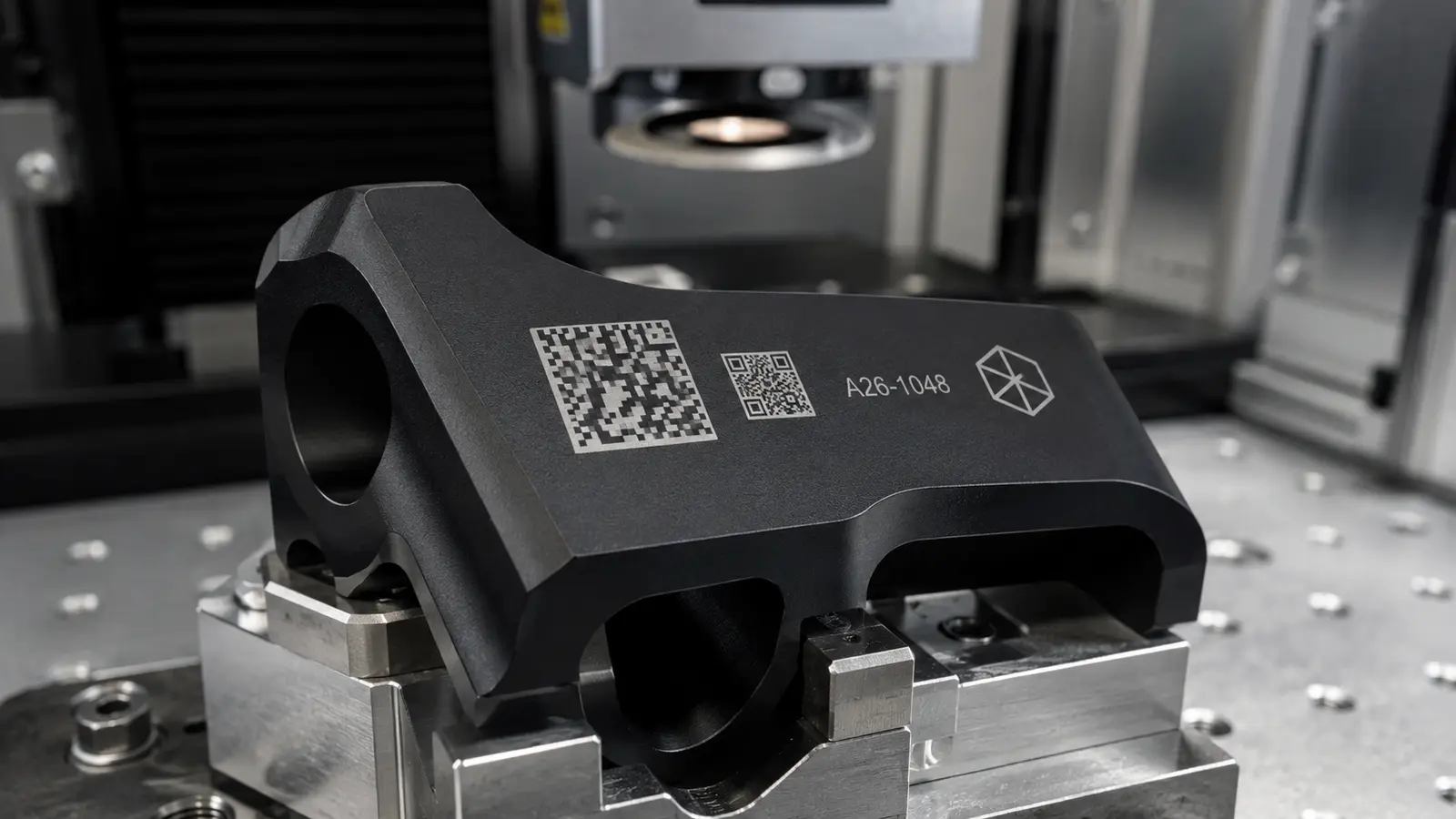
Machine-readable identity on the component
Apply controlled GS1 DataMatrix symbols, serial numbers and human-readable information directly to suitable parts, with production data and verification built into the process.
Direct part identification
A GS1 DataMatrix direct-part-marking system combines an approved data structure with a laser process capable of producing a durable symbol on the component. Fixtures, controlled data transfer and code verification help ensure the right identity is placed on the right part.
Oxford Traceability engineers the marking process. The manufacturer remains responsible for determining the applicable GS1, customer and regulatory requirements for its product.
Transfer identifiers from approved production sources.
Develop a laser process around the material and service life.
Assess symbol quality against the agreed method and reader set.
Link the mark outcome to the production record where required.
Data structure
Before artwork is created, define which GS1 Application Identifiers and data elements are required, who issues each value and how uniqueness is controlled. The symbol size and data capacity then inform the available module size and marking field.
GS1 recommends GS1 DataMatrix with a GTIN and serial number as an appropriate approach for certain reusable instruments where direct marking is required. Review the applicable GS1 guidance for your product.
Define the authoritative data source and the rules for issuing, reworking and retiring identifiers before integration begins.
Mark development
Direct part marking must balance symbol contrast and geometry with the component’s surface, coating and functional limits. Flatness, curvature, reflectivity, texture and available area influence the optics, fixture and laser recipe.
A fresh laboratory mark is only the starting point when the part will be cleaned, sterilised, coated, handled or exposed to abrasion.
Verification & control
A production reader can confirm that encoded content is present and correct. Formal verification assesses defined symbol-quality characteristics using an agreed method. The project should state whether it requires simple decode, content comparison, quality grading or all three.
Code quality can appear different under different lighting, optics and algorithms. Define the production and audit method before machine acceptance.
DataMatrix questions
Bring the code standard, component and production requirement together at the start.
Request a marking trialIt is the application of a GS1-structured DataMatrix symbol directly onto a component rather than onto a separate label or package. The required data and durability depend on the product’s applicable rules and lifecycle.
Yes, on suitable metals and engineered plastics. The practical symbol size and quality depend on the material, surface, optics, cell size, code content, fixture and verification method.
No. A successful decode shows that one reader obtained the data. Verification uses a defined method to assess symbol-quality characteristics and provides a more controlled acceptance measure.
It can use database, PLC or production-system rules to control identifier issue, compare expected and marked data, and prevent a completed identity from being reused. The exact logic must match the site’s data ownership process.
Start your marking trial
Share the material, mark content and production rate. We will help you define the right fibre laser marking system.
Your application
Tell us what you need to mark and we will come back to you.