Compact permanent codes
Apply DataMatrix symbols and text where labels are unsuitable or space is limited.
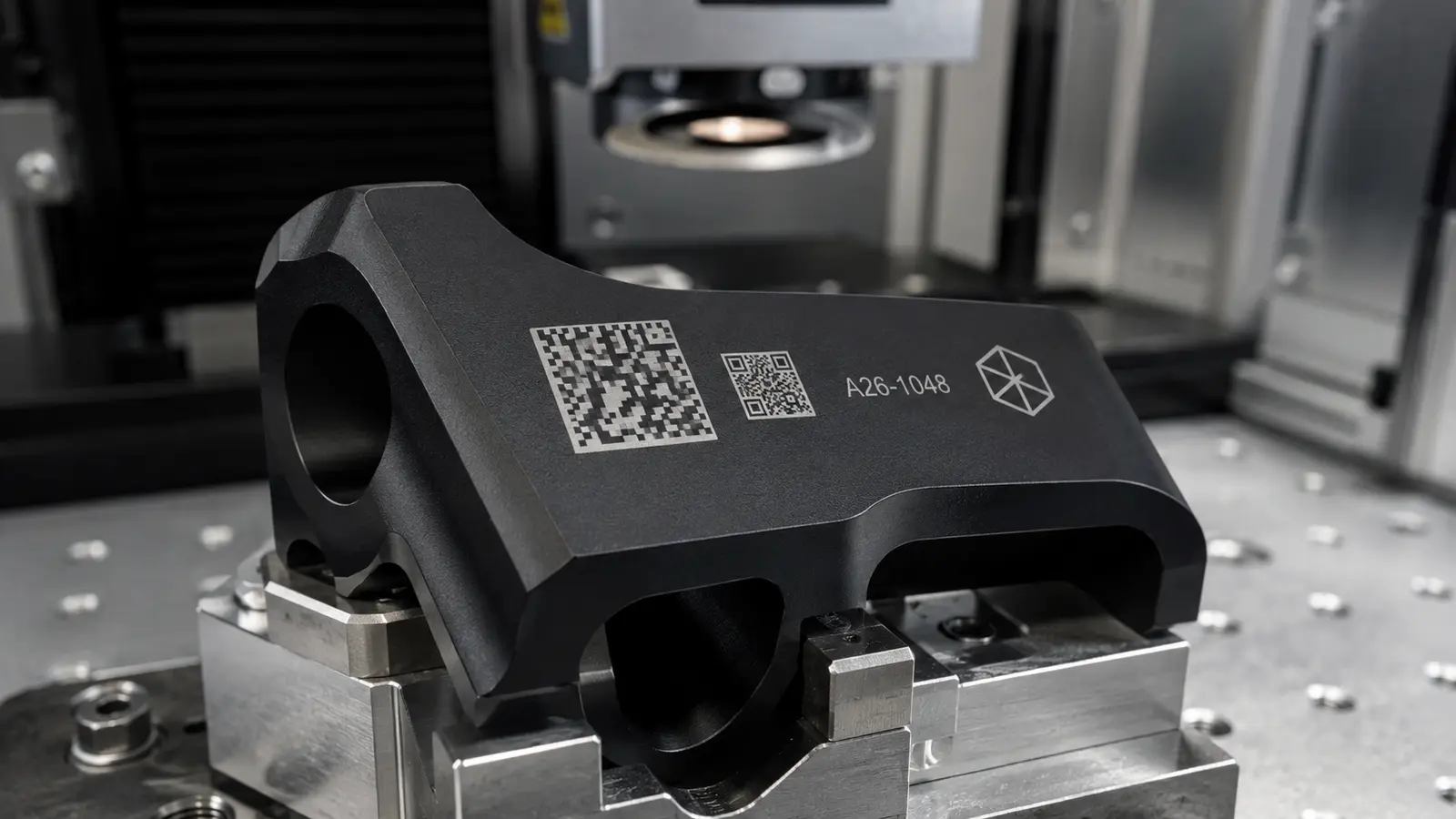
UDI, DataMatrix and direct part marking
Engineer a permanent marking process for controlled device identity, compact 2D codes and traceability data—with evidence from the actual material and reprocessing environment.
Regulated identity needs process evidence
Laser direct-part marking can create permanent UDI and DataMatrix identification on suitable medical-device materials. The device manufacturer remains responsible for regulatory interpretation, data assignment and validation; the marking system must be proven against the approved material, code specification, cleaning or sterilisation exposure and required verification method.
A medical-device marking project may need a UDI carrier, human-readable content, serial or lot data and records linking the mark to the production event. Oxford Traceability helps translate the customer’s approved data and acceptance criteria into a practical laser, fixture, vision and control solution.
Discuss your marking requirementApply DataMatrix symbols and text where labels are unsuitable or space is limited.
Receive identifiers from approved files, scanners, databases or production systems.
Decode, compare or grade the result according to the defined inspection requirement.
Record the recipe, identifier, result and relevant process event where required.
UDI and GS1 DataMatrix
The laser should not invent or reinterpret regulated data. The customer defines the issuing system, required Application Identifiers, human-readable information, symbol dimensions and record rules. Oxford Traceability configures the marking and inspection workflow around that controlled input.
Provide the approved code examples, data rules, device class, market and internal validation plan before the system specification is frozen.
Durability and verification
Surface finish, corrosion behaviour, passivation, cleaning, sterilisation and repeated reprocessing may affect the accepted process. Trials should use representative devices and the customer’s defined conditioning and inspection method.
The customer’s validation should state when and how the mark is inspected, including after any required environmental or reprocessing sequence.
Specification questions
Use these points to compare suppliers and trial evidence on the same basis.
Authoritative context: MHRA proposals on compulsory UDI and GS1 guidance on reusable-instrument identification. Customers must confirm the rules applying to their devices and markets.
Direct answers
We will test your parts and help convert the required result into a practical machine specification.
Call 01865 362785It can mark many suitable metals and selected engineered plastics, but the exact process must be proven on the approved device material, finish and mark location.
Not always. A scan confirms that one reader decoded the symbol. Data comparison and formal quality grading are separate requirements and should be stated explicitly.
Yes. The marking cell can receive controlled data through an agreed interface, validate fields and return result information, subject to the customer’s software and validation requirements.
No. The device manufacturer is responsible for regulatory compliance, identifier assignment and validation. Oxford Traceability supplies and integrates the marking process against the customer’s approved specification.
Start your marking trial
Share the material, mark content and production rate. We will help you define the right fibre laser marking system.
Your application
Tell us what you need to mark and we will come back to you.