Unique serialisation
Apply part-specific identifiers linked to the production order or component record.
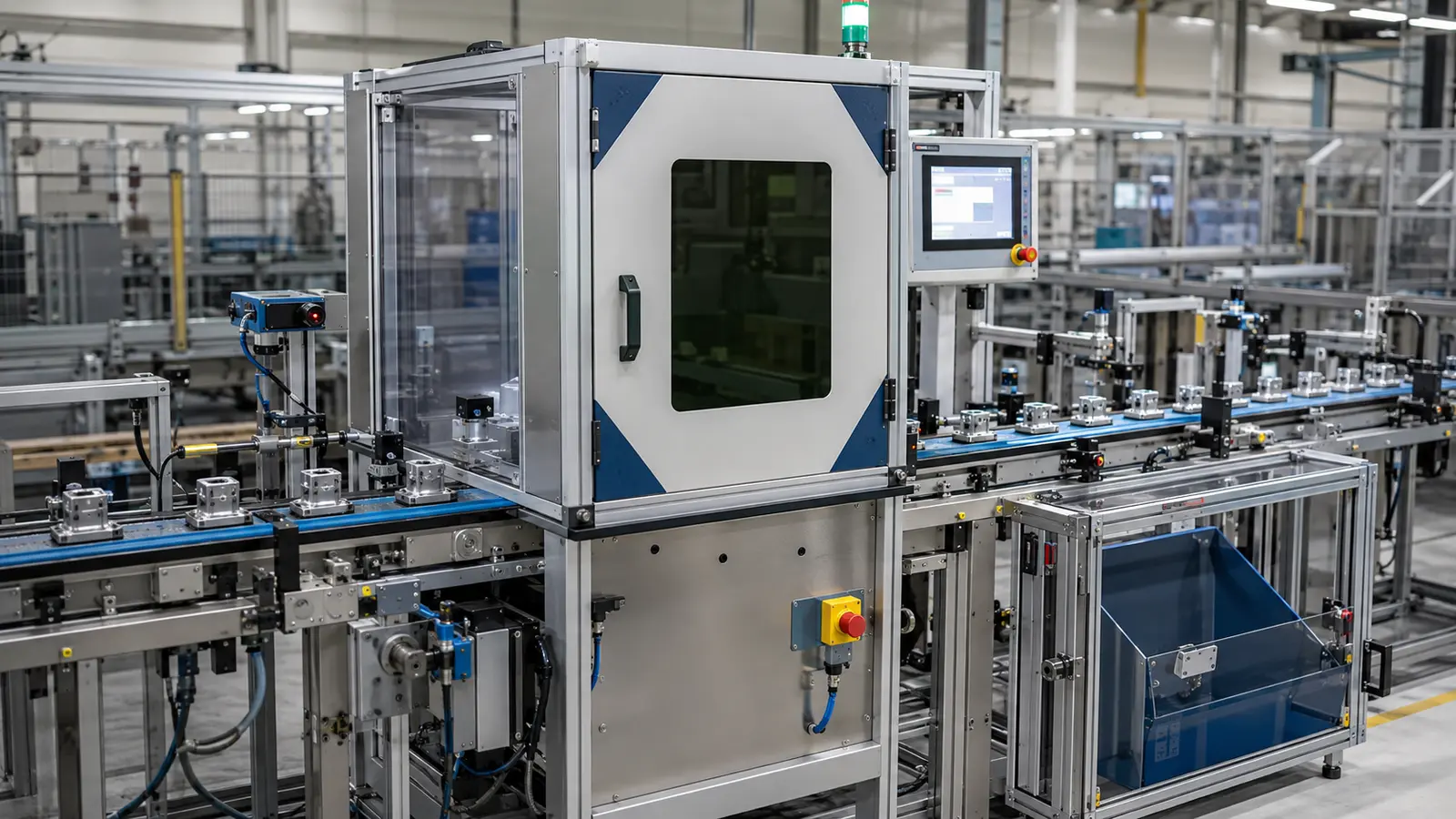
Component identity and production traceability
Apply permanent part numbers, serials and machine-readable codes with fixtures, data control and inspection engineered around the production process.
Traceability beyond the laser
Fibre lasers are widely suited to permanent marking on many steel, aluminium and coated production components. A robust automotive or aerospace solution also controls part identity, orientation, data, mark location, code readability and the response to a failed check.
Automotive, EV, aerospace and precision-engineering components often need identity that supports assembly, quality, service or genealogy. Oxford Traceability integrates the laser with part detection, recipes, PLC signals, production data and post-mark checks to control the complete event.
Discuss your marking requirementApply part-specific identifiers linked to the production order or component record.
Create DataMatrix or QR symbols for assembly, service and traceability workflows.
Check the part, orientation and recipe before marking begins.
Confirm the mark and route, record or reject non-conforming parts.
Part and process control
A mark can be technically sharp but still wrong if the incorrect recipe or identifier is used. The cell can receive product selection from a PLC, scanner, MES or database, then check part-present and orientation conditions before enabling the laser.
Provide the normal sequence, data owner, retry rules and required reaction to missing, duplicate or failed marks before controls are designed.
Production hardware
The machine may be a manual Class 1 workstation, an indexed fixture, a conveyor-mounted unit or a robot-loaded cell. The correct format depends on component mass, presentation, marking faces, production rate and operator interaction.
Include loading, locating, data transfer, marking, inspection, unloading and any reject action—not only laser-on time.
Specification questions
Use these points to compare suppliers and trial evidence on the same basis.
Oxford Traceability engineers the marking cell against the customer’s approved drawings, control plan, data rules and acceptance criteria; it does not infer industry-specific compliance from a generic laser sample.
Direct answers
We will test your parts and help convert the required result into a practical machine specification.
Call 01865 362785Yes. The system can generate or receive unique serials and codes, subject to a clearly defined data owner, duplicate-prevention method and production interface.
Often yes. Part identification, recipes, adjustable or change-part fixtures and validation checks can support a family of parts within the machine envelope.
Yes. Vision can check presence, position, text or code content. Formal code grading is a separate requirement and must be specified with the relevant method.
Yes, after the signals, data structure, responsibilities, retry logic and result messages are agreed with the customer’s controls and IT teams.
Start your marking trial
Share the material, mark content and production rate. We will help you define the right fibre laser marking system.
Your application
Tell us what you need to mark and we will come back to you.